Palomar Knot
Strong and simple for hooks, swivels and other terminal tackle.
Carp fishing basics
A complicated rig is no use if the knot connecting it to your line fails. Carp fishing involves several different connections, so it is more useful to learn a small number of dependable knots than to memorise dozens that all do roughly the same job.
This guide covers four practical knots: the Palomar Knot, Uni Knot, Locked Half Blood Knot and Figure of Eight Loop. Together they cover common jobs such as attaching hooks and swivels and creating a secure loop connection.
The diagrams show each knot step by step. Take your time when learning: neat wraps, steady tightening and checking the finished knot are more important than tying quickly.
Strong and simple for hooks, swivels and other terminal tackle.
A versatile connection for attaching line to a hook, ring or swivel.
A compact terminal knot with an extra locking step before tightening.
A useful way to create a neat fixed loop for loop-to-loop connections.
Knot 1
The Palomar is a useful knot when you want a strong connection to a hook or swivel and can pass a doubled section of line through the eye. Its appeal is the relatively short tying sequence: double the line, form an overhand knot, pass the loop over the terminal item and then tighten everything down.
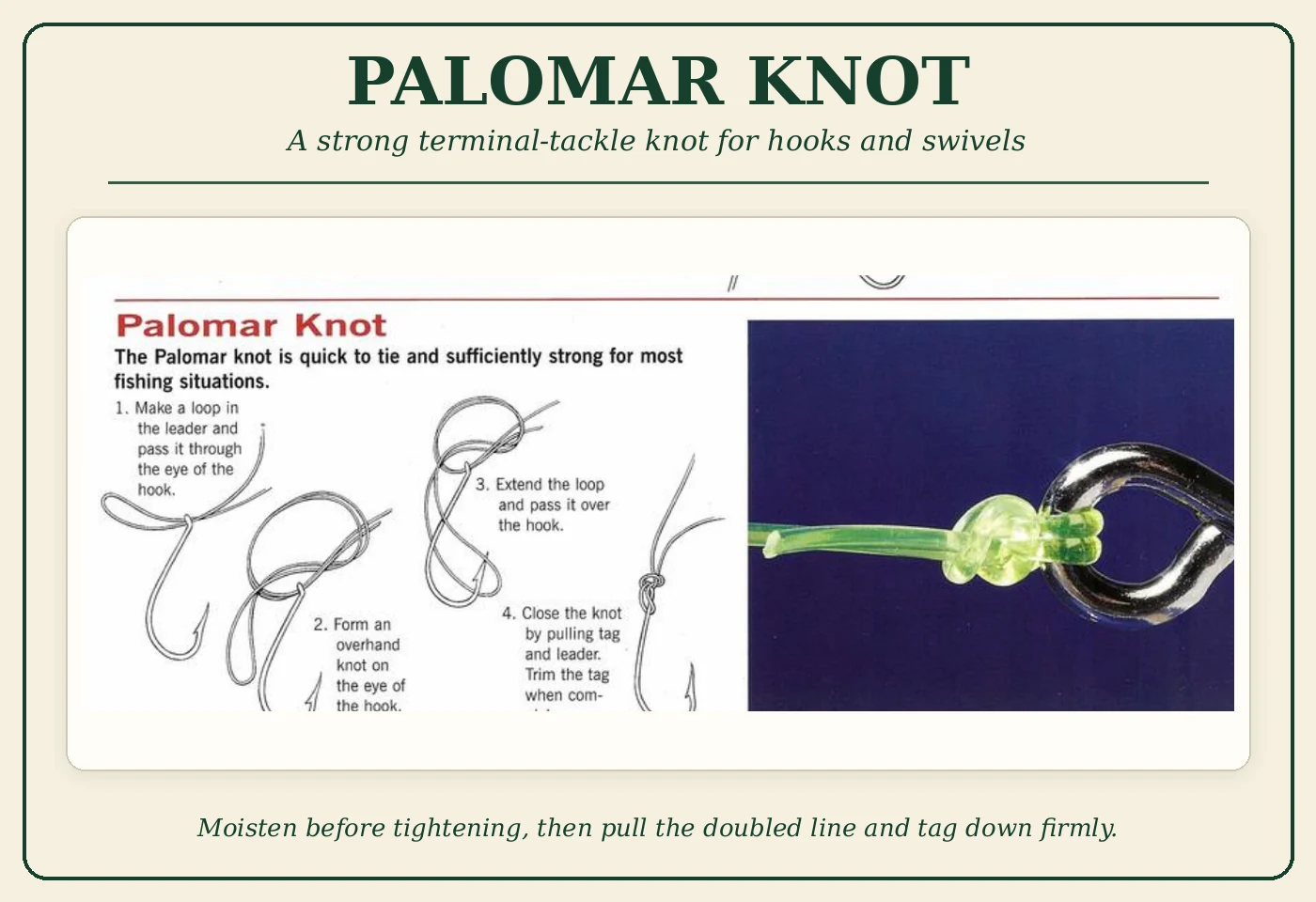
Knot 2
The Uni Knot is one of the most versatile terminal knots to learn. The tag end forms a loop alongside the standing line, wraps around the doubled section and is then drawn down towards the hook or swivel eye.
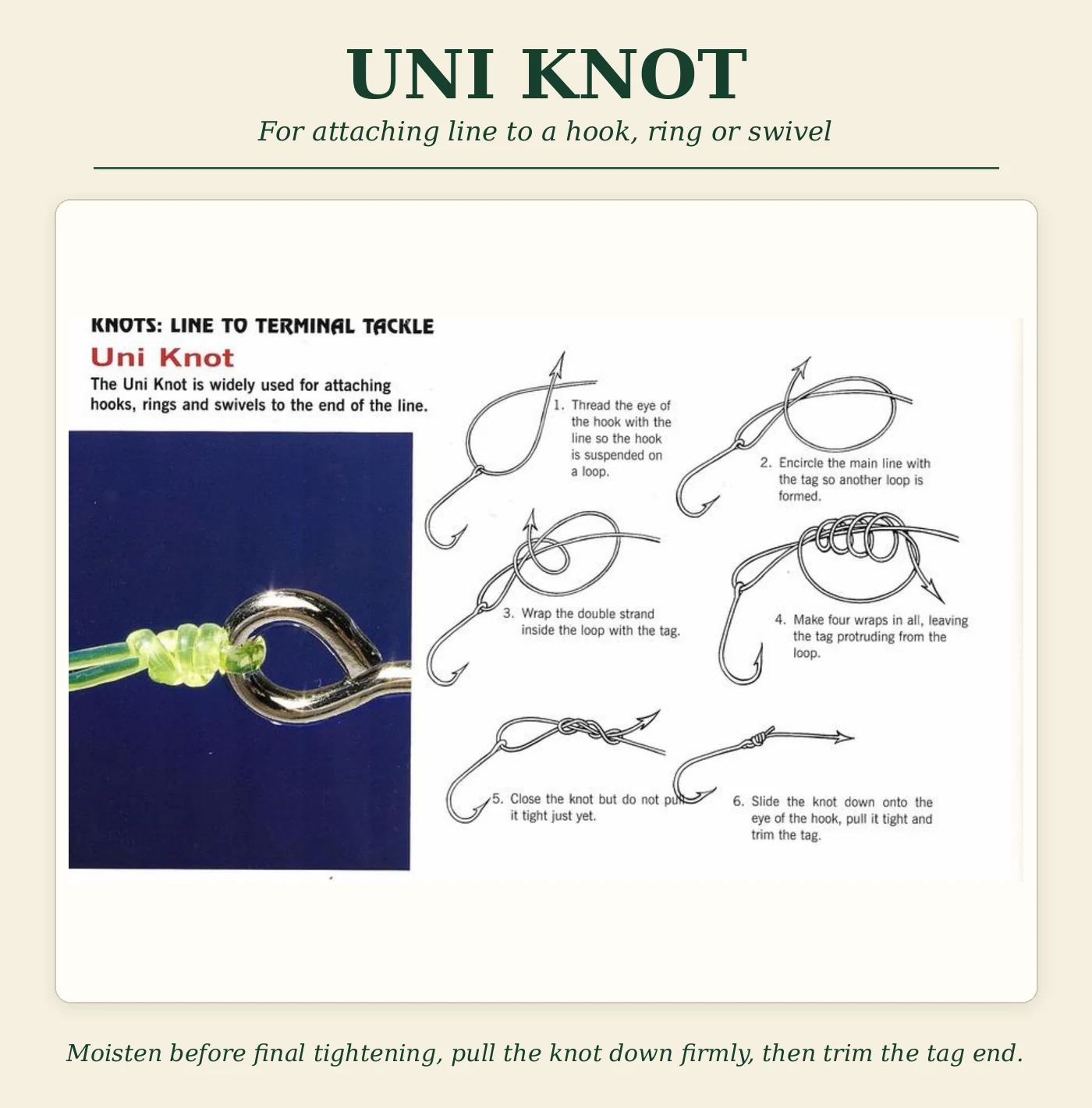
Knot 3
The Locked Half Blood Knot starts with the familiar series of turns around the standing line. The tag is passed through the first opening and then through the additional loop before the knot is drawn firmly onto the hook or swivel.
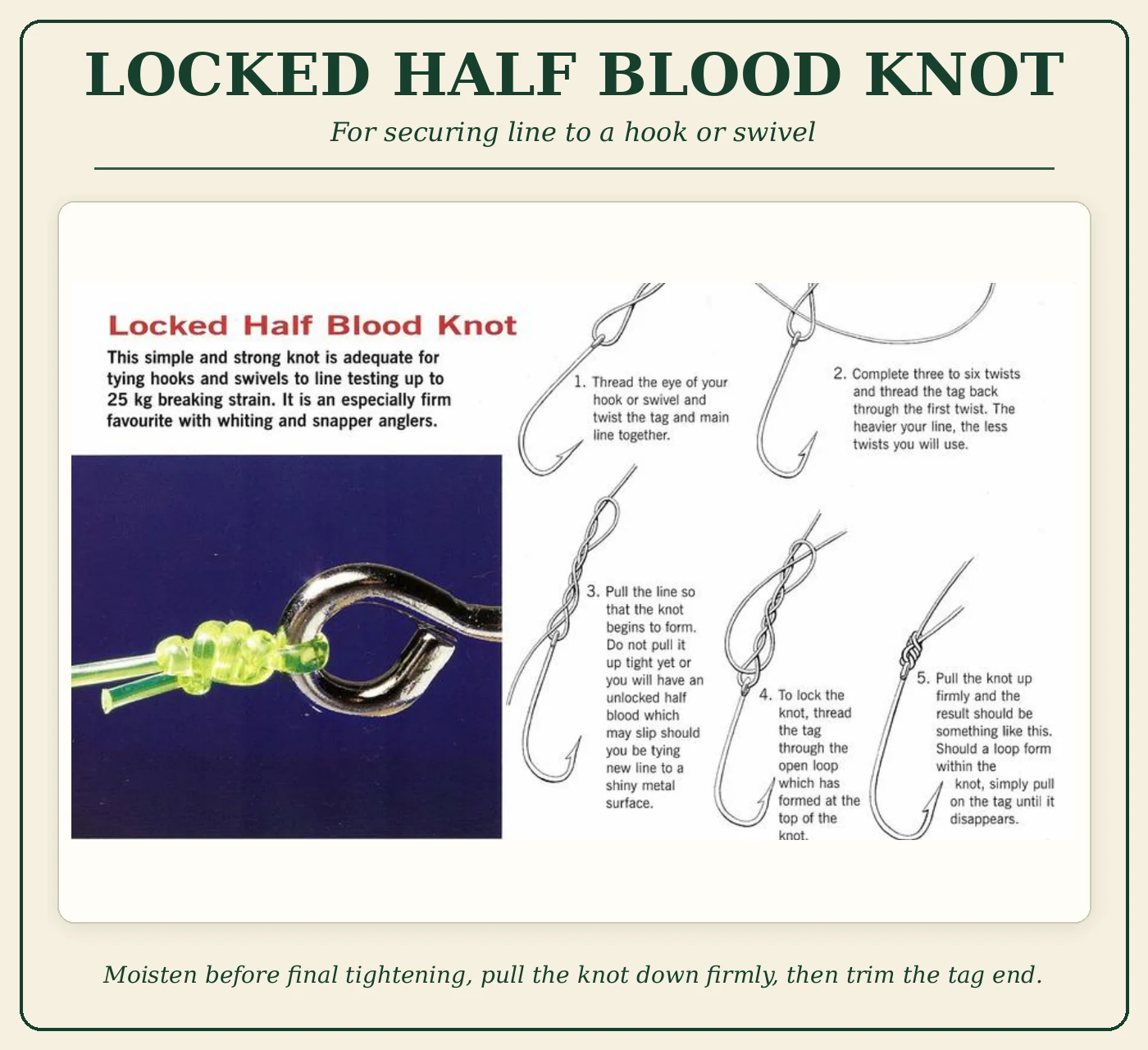
Knot 4
Not every useful carp-fishing knot attaches directly to a hook or swivel. A fixed loop is useful when two pieces of tackle are designed to connect loop to loop. The Figure of Eight Loop creates a compact loop by doubling the line back on itself before completing the knot.
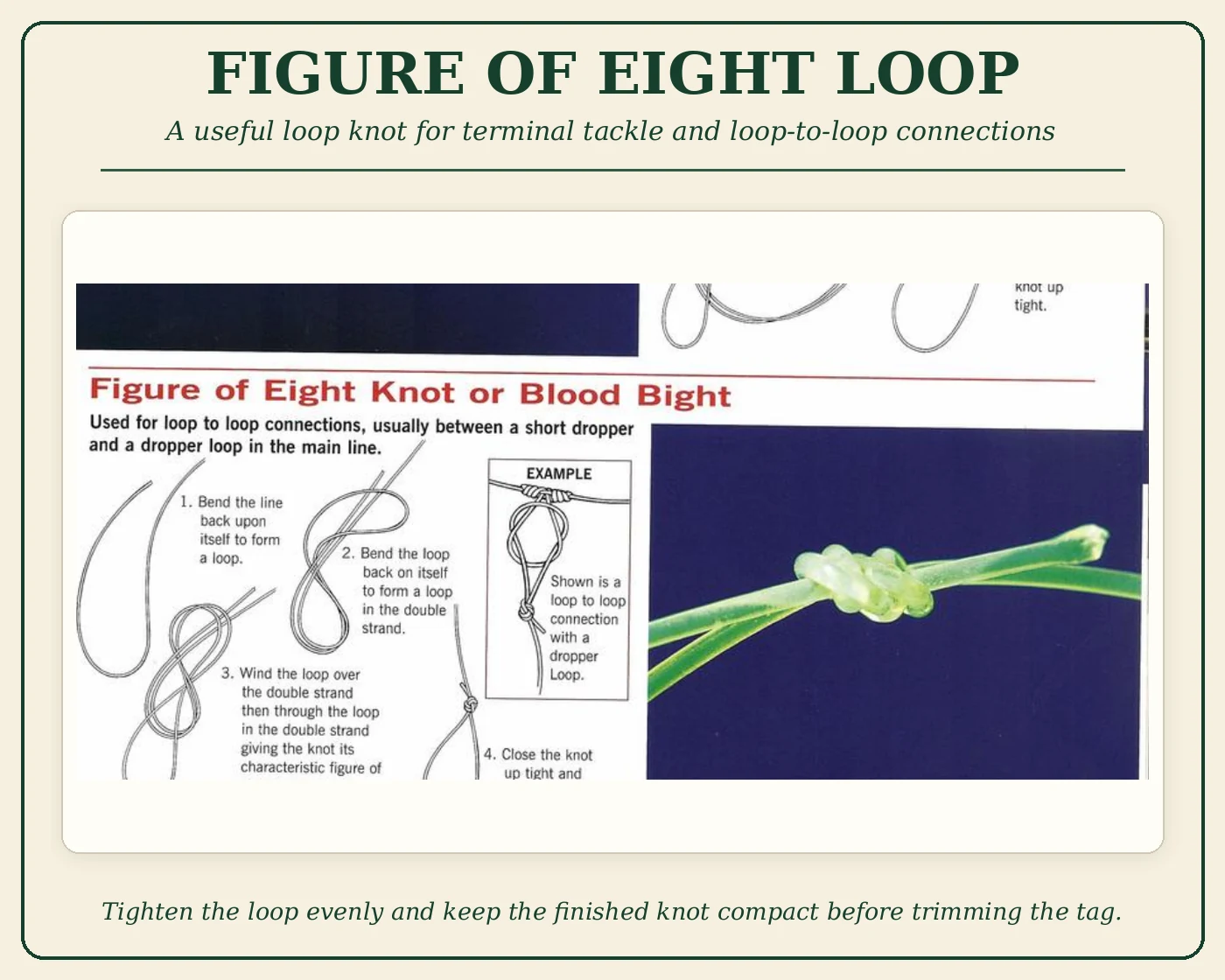
Choosing a knot
Start with the job the knot needs to perform rather than choosing a knot simply because it is familiar. A hook or swivel connection and a loop connection are different jobs.
Start with the Palomar or Uni Knot. The Locked Half Blood gives you another useful option for a compact wrapped connection.
Use the Figure of Eight Loop when the tackle arrangement calls for a secure fixed loop rather than a knot tightened directly onto an eye.
Before you cast
Also check the rules of the fishery you are visiting. Hook patterns, hook sizes, leaders and rig components can be restricted at individual venues. Our carp fishing lakes directory can help you find waters to investigate, but always read the venue's current rules before travelling.
Common questions
There is no single best knot for every part of a carp rig. The Palomar and Uni are useful terminal-tackle knots, the Locked Half Blood is another compact hook or swivel connection, and the Figure of Eight Loop handles a different job by creating a fixed loop.
Yes. It is a simple terminal-tackle knot and is particularly convenient when the eye of the hook or swivel is large enough for a doubled section of your line to pass through comfortably.
With nylon and fluorocarbon, moistening the knot before final tightening helps reduce friction as the wraps bed down. Tighten it steadily, inspect the finished connection and test it before casting.
You do not need dozens. A dependable terminal knot, a second option for hooks and swivels and a fixed-loop knot cover many everyday situations. Learn a few properly before adding more.
Ready to plan a session? Browse our UK carp fishing lakes, see our guide to baits for catching big carp, or use the fishing lakes near me finder.
Affiliate · Amazon

As an Amazon Associate I earn from qualifying purchases.