Spring
Start with modest amounts of boilies, pellets, corn or natural baits. Carp may be becoming more active, but cool water can still make heavy feeding a mistake.
Big carp can be caught on everything from boilies and pellets to sweetcorn, tiger nuts and natural baits. The best choice depends on the venue, season, fishing pressure and how confidently the fish are feeding.
Quick answer
High quality boilies are the most dependable all round option for targeting bigger carp. Pellets, tiger nuts, sweetcorn, hemp and natural baits can be equally effective when matched to the lake and conditions.
On pressured waters, a single hookbait or a small amount of feed can outperform a large bed of bait. On lakes where carp are feeding confidently, a mixture of boilies, pellets and particles can keep fish searching for longer.
Top choices
Each bait has its own strengths. The important part is matching your bait, presentation and feeding approach to the water in front of you.
Boilies are one of the most reliable baits for targeting big carp. They are available as bottom baits, wafters and pop ups, and can also be introduced as loose feed.
Carp, trout and halibut pellets release oils and attractive food signals. Smaller pellets create quick attraction, while larger pellets provide a more substantial food source.
Tiger nuts are sweet, crunchy and resistant to many nuisance species. They can work particularly well on pressured waters, but must be properly prepared and allowed by the fishery.
Sweetcorn is inexpensive, highly visible and effective for carp of all sizes. It can be used by itself or alongside pellets, hemp and other approved particles.
Small particles encourage carp to keep searching and feeding. Use commercially prepared particles or prepare them safely, and always check the fishery rules first.
Natural baits can be excellent in cold water or when carp have seen endless boilies. They can also attract smaller fish, so they are best used where nuisance species are manageable.
Bread, dog biscuits and floating pellets can work well during warm weather when carp are cruising near the surface. Only use them where floating baits are permitted.
Pop ups and balanced wafters can sit above light weed, silt or debris and make the hookbait easier for a carp to pick up.
A single high attraction hookbait can be ideal for short sessions, colder weather and heavily pressured lakes.
Seasonal choices
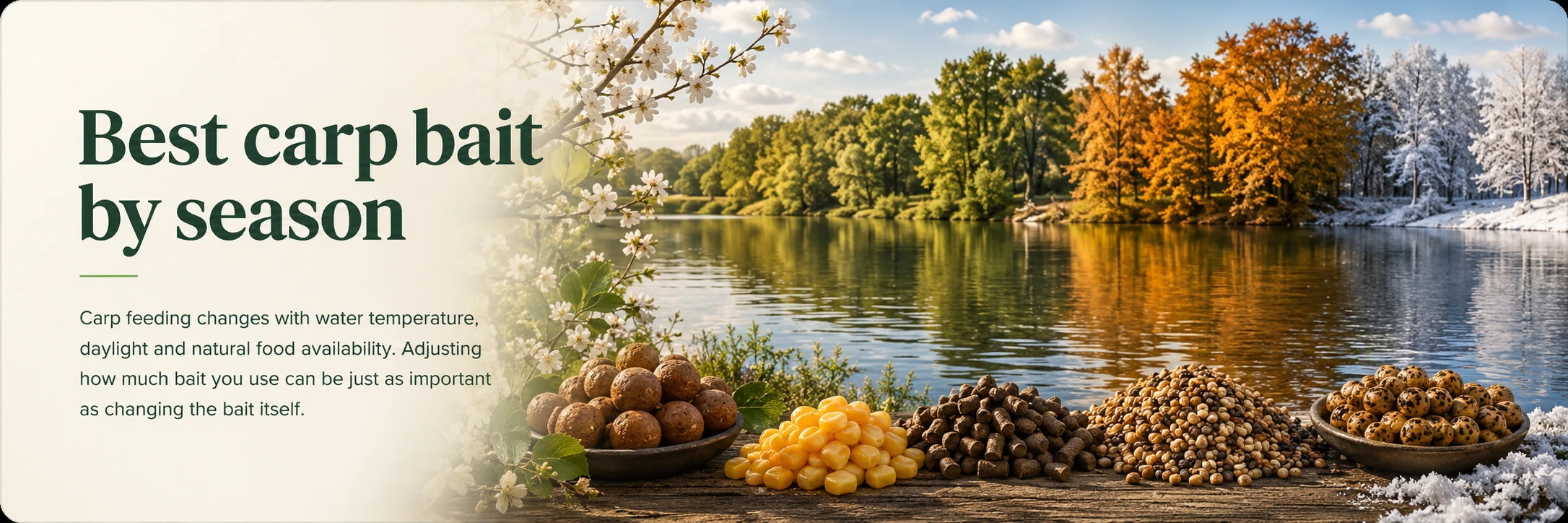
Carp feeding changes with water temperature, daylight and natural food availability. Adjusting how much bait you use can be just as important as changing the bait itself.
Start with modest amounts of boilies, pellets, corn or natural baits. Carp may be becoming more active, but cool water can still make heavy feeding a mistake.
Boilies, pellets, particles and surface baits can all work. Look for showing fish, bubbles and cruising carp before introducing large amounts of feed.
Nutritious boilies and pellets can be particularly effective as carp feed ahead of colder weather. Controlled regular feeding can keep fish returning to an area.
Use small amounts of attractive bait. Pop ups, wafters, maggots, sweetcorn and small pellets can work well when feeding activity is limited.
Baiting strategy
Overfeeding is one of the easiest ways to spoil a carp session. Start cautiously unless several fish are clearly feeding.
You can always add more bait. Removing ten kilograms of boilies from the lake is considerably more difficult.
Presentation
A good bait still needs to be presented where carp can find it and feed on it confidently.
Bottom baits suit clean gravel, clay and firm lakebeds. They offer a natural presentation when fished among matching loose feed.
Wafters are lightly buoyant and can make the hookbait easier for a feeding carp to pick up. They work over many lakebed types.
Pop ups can sit above light weed, debris or soft silt. Bright colours also make them useful as high attraction single hookbaits.
Avoid these errors
Nuts, particles, floating baits and some pellets may be restricted or banned.
Large quantities can fill the carp up, spread them out or leave them feeding without needing to take the hookbait.
Use commercially prepared particles or follow reputable preparation guidance. Never introduce dry or unsafe particles.
Mouldy, rancid or badly stored bait belongs in the bin, not the lake.
The finest boilie in Britain will struggle if the carp are at the opposite end of the lake.
Recasting and changing bait constantly can disturb the swim. Give a well placed bait enough time to work.
Before fishing
Every carp lake has its own bait and tackle rules. Some ban nuts, limit bait quantities, require venue pellets or prohibit floating baits.
Check the fishery website or speak to the venue before travelling. Local advice can also tell you which baits are currently working.
FAQ
High quality boilies are the most dependable all round choice. Pellets, tiger nuts, particles, sweetcorn and natural baits can also be excellent depending on the venue and conditions.
Boilies make selective hookbaits, while pellets create strong attraction and encourage feeding. Many anglers use both together.
Yes. Tiger nuts can be effective on pressured waters and where nuisance fish make softer baits difficult to use. They must be properly prepared and permitted by the fishery.
Start with a small amount unless several carp are clearly feeding. Increase the quantity gradually based on activity, captures, weather and water temperature.
Small, highly attractive hookbaits often work well in winter. Pop ups, wafters, maggots, sweetcorn and small pellets are common choices when feeding activity is limited.
Yes. Large carp are regularly caught on sweetcorn. It is bright, sweet and familiar, although smaller fish may reach it before the carp do.